
Affiliate disclosure: This research-based guide contains Amazon affiliate links. HappyPetJourney may earn from qualifying purchases at no extra cost to you.
Evidence label: Research-based. We compared published dimensions, door layouts, folding methods, trays, and size guidance. Crates were not represented as personally tested.
What we checked
- interior and exterior dimensions
- door swing
- wire and latch construction
- tray removal
- folded storage footprint
Measure the apartment before choosing a crate
Mark the crate footprint on the floor with tape, including the open door. Walk the normal route around it and confirm drawers, doors, vents, and outlets remain usable. Then measure the dog standing, nose-to-rump, and at the shoulder.
- A divider helps size growing puppies without buying a second full crate.
- Double doors add placement flexibility only if both latch securely and the unused door does not face a hazard.
- A removable tray should slide out without moving nearby furniture; place a quiet, non-slip mat underneath if needed.
- Folding dimensions matter in apartments: check whether the collapsed crate fits the intended closet, car, or storage area.
- Standard wire crates are not suitable for dogs that panic, bend bars, or injure themselves trying to escape.
Test the assembled crate while you are home. Watch for sharp wire ends, gaps, loose latches, tray movement, and collar tags that could catch; remove collars when safe crating practice requires it.
Choose by situation
| Your situation | Prioritize | Avoid |
|---|---|---|
| Tight apartment layout | Double-door crate only where the full door swing remains clear | Using interior dimensions as the floor footprint |
| Growing puppy | Adult-size frame with an adjustable divider | Too much unused sleeping space during house training |
| Dog panics or bends wire | Behavior assessment and a safer individualized confinement plan | Escalating to heavier wire without addressing panic |
Quick pick
MidWest iCrate Double Door
Confirm the exact length, two-door configuration, divider, and seller return terms.
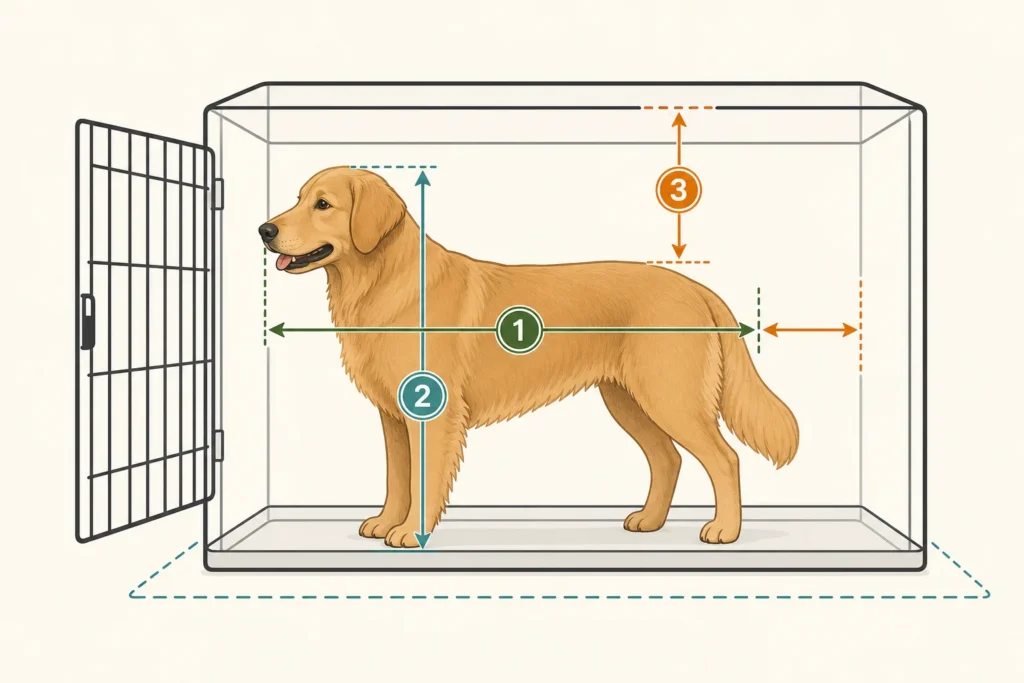
Size the dog before the crate
- Length: nose to the base of the tail—not the tail tip.
- Standing height: floor to the highest natural head or ear position.
- Clearance: allow room to stand, turn, sit, and lie naturally without buying from breed name alone.
Illustration shows measurement points, not a specific crate model.
Last checked: July 27, 2026. Confirm the current size chart, materials, seller, warranty, and return terms before ordering.
Compare the shortlist
Start with the apartment constraints: measure the dog, floor footprint, door swing, walking clearance, and the route used to move or fold the crate.
Shortlist
| Pick | Best for | Useful detail | Main tradeoff |
|---|---|---|---|
| MidWest iCrate Double Door | Best value and flexible placement | Divider, tray, folding frame; sizes to 48 in | Light-duty wire is not for escape artists |
| MidWest LifeStages Double Door | Heavier wire-crate option | Double-door layout and divider | Heavier and still visually industrial |
| Diggs Revol Large | Premium apartment setup | Collapsible, wheels, garage door and ceiling hatch | 53 lb and a premium price |
MidWest iCrate Double Door
Before clicking: Confirm the exact length, two-door configuration, divider, and seller return terms.
- Best for: Most apartment owners seeking value and flexible placement
- Why it stands out: Divider, tray, folding frame, and two-door layout
- Main compromise: Standard wire construction is not for escape behavior
MidWest publishes double-door sizes from 22 to 48 inches. The 42-inch model is listed for dogs from 71–90 lb and the 48-inch model for 91–110 lb. Two doors give more options when a crate must sit beside furniture or against a wall.
Skip it if: your dog bends wire, panics in confinement, or has a history of escaping standard crates.
Check iCrate sizes on AmazonSpecification source: MidWest.
MidWest LifeStages Double Door
Before clicking: Confirm the heavier LifeStages line and the correct interior dimensions.
- Best for: Owners wanting a heavier wire-crate option
- Why it stands out: More substantial construction with familiar practical features
- Main compromise: Heavier to carry and still visually industrial
LifeStages is the heavier-duty MidWest wire-crate line. It is worth comparing when the iCrate’s lighter construction feels insufficient, while retaining the practical divider, tray, and folding format.
Skip it if: carrying weight or a visually lighter apartment setup matters more than heavier wire construction.
Check LifeStages sizes on AmazonSpecification source: MidWest Homes for Pets.
Diggs Revol Large
Before clicking: Confirm exterior footprint, 53 lb product weight, and collapsed storage size.
- Best for: Premium apartments where folding and everyday usability matter
- Why it stands out: Wheels, multiple access points, and a polished collapsible design
- Main compromise: High price, 53 lb weight, and a large stored footprint
The large Revol publishes a 45.3 by 30.8 inch exterior footprint, folds to 48 by 31 by 13 inches, and includes wheels, a garage-style door, and a ceiling hatch. It fits many large breeds but not every giant dog.
Skip it if: the 53 lb crate weight, premium price, or published interior dimensions do not suit your dog and floor plan.
Check Diggs Revol options on AmazonSpecification source: Diggs.
Apartment measurements that matter
- Measure the exterior footprint with the door fully open.
- Confirm the dog can stand, turn, and lie down naturally.
- Place the crate away from radiators, direct sun, and a path where people constantly step over it.
- Use a mat under wire crates if pan movement or tags create noise for downstairs neighbors.
Behavior note: a stronger crate is not a treatment for separation anxiety. Dogs that panic, drool heavily, injure themselves, or bend bars need professional help and a safer plan.
Specifications reviewed July 26, 2026. Confirm current sizing and return conditions before assembly.
Check it before you keep it
Assemble the crate indoors before discarding packaging. Check the tray, divider, latches, door clearance, sharp points, and whether the dog can stand, turn, and rest comfortably.
- Assemble the crate and inspect every wire end, hinge, latch, and panel connection.
- Confirm the dog can stand, turn, sit, and lie naturally inside.
- Open every door fully and remove the tray in the planned apartment location.
- Return it if panels bow, latches misalign, or the dog shows panic or attempts self-injury.