Affiliate disclosure: This research-based guide contains Amazon affiliate links. HappyPetJourney may earn from qualifying purchases at no extra cost to you.
Evidence label: Research-based. We separated independent certification from manufacturer crash testing. We did not personally crash-test these restraints.
What we checked
- published test language
- dog weight and rib-cage range
- vehicle attachment method
- webbing and stitching
- replacement guidance after a collision
How to verify a car-restraint claim
“Crash tested” is incomplete unless the brand identifies the test setup, dummy weight, attachment configuration, and pass criteria. Independent certification and a manufacturer-run sled test are different evidence levels.
- Match both weight and rib-cage measurements to the current chart; do not size from breed alone.
- Read the installation guide before purchase and confirm it works with the intended rear-seat position.
- Reject a setup that clips to a collar, allows the dog into the front-seat area, or relies on an unexplained universal tether.
- Inspect webbing, seams, buckles, and attachment points before every trip. Replace damaged equipment and follow the maker’s post-collision guidance.
Introduce the restraint during short parked sessions, then short drives. A technically suitable harness is still a poor fit if it restricts breathing, rubs behind the legs, or cannot be installed exactly as instructed.
Choose by situation
| Your situation | Prioritize | Avoid |
|---|---|---|
| Independent evidence is the priority | A currently listed CPS-certified model in the correct size | Treating any “crash tested” phrase as equivalent to certification |
| Large or deep-chested dog | Rib-cage-specific sizing and a published upper weight range | Buying by breed name or weight alone |
| Budget is limited | Documented whole-system testing and exact installation instructions | An unexplained tether clipped to a walking harness or collar |
Quick pick
Sleepypod Clickit Sport Plus
Confirm rib-cage size and rear-seat installation method.
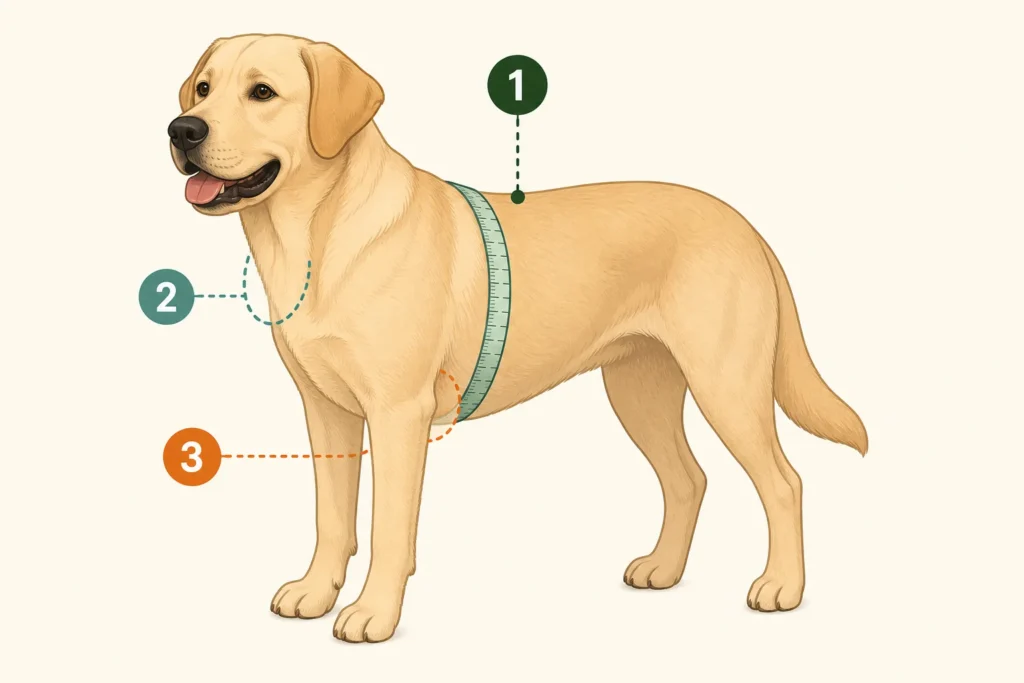
Check harness fit from the rib cage
- Chest measurement: wrap the tape around the deepest part of the rib cage.
- Lower neck: straps should sit where the manufacturer’s diagram specifies, not across the throat.
- Leg clearance: check behind the front legs for rubbing through the full walking motion.
Use the current manufacturer size chart; this illustration is not a substitute for fitting instructions.
Last checked: July 27, 2026. Confirm the current size chart, materials, seller, warranty, and return terms before ordering.
Compare the shortlist
Begin with the dog’s rib-cage measurement, weight, body shape, and the vehicle seating position. Then verify the exact restraint system and published test evidence.
Shortlist
| Pick | Published range | Testing status | Main tradeoff |
|---|---|---|---|
| Sleepypod Clickit Sport Plus | 18–90 lb | Center for Pet Safety 5-star certification; published sled testing | Fit range and seating position must be followed closely |
| Sleepypod Clickit Range | 18–110 lb | Manufacturer publishes U.S., Canadian, and E.U. child-seat-standard testing | Premium price; measure rib cage carefully |
| Kurgo Enhanced Strength Tru-Fit | Published crash-test examples to 75 lb | Manufacturer/Calspan testing based on FMVSS 213 procedure | Not the same as current CPS certification |
Sleepypod Clickit Sport Plus
Before clicking: Confirm rib-cage size and rear-seat installation method.
- Best for: Strongest independent evidence for dogs inside its published fit range
- Why it stands out: CPS certification and a three-point restraint design
- Main compromise: Strict fit and seating requirements
Sleepypod describes a three-point restraint with an energy-absorbing vest and strength-tested materials. The Center for Pet Safety lists the Clickit Sport, including the XL harness rated to 90 lb, among its certified products.
Skip it if: your dog’s weight or rib-cage measurement falls outside the current chart, or the vehicle seating configuration cannot follow the instructions.
Check Clickit Sport Plus on AmazonSources: Sleepypod and Center for Pet Safety.
Sleepypod Clickit Range
Before clicking: Confirm standard or long fit and the current weight range.
- Best for: Large or deep-chested dogs that match its standard or long chart
- Why it stands out: Broader published body-shape and weight coverage
- Main compromise: Premium price and measurement-sensitive fit
Sleepypod publishes standard and long rib-cage ranges, including sizes for dogs up to 110 lb. This makes it the more relevant Sleepypod option for some large or deep-chested dogs, but fit must be checked against the current chart.
Skip it if: the rib-cage shape does not match the chart or your dog cannot settle comfortably in the required restraint position.
Check Clickit Range on AmazonSpecification source: Sleepypod car harness comparison.
Kurgo Enhanced Strength Tru-Fit
Before clicking: Confirm the exact enhanced-strength model, not a similarly named walking harness.
- Best for: Buyers seeking a lower-cost documented test option
- Why it stands out: Published manufacturer and Calspan test information
- Main compromise: Not interchangeable with current CPS certification
Kurgo publishes a Calspan test methodology using a procedure adapted from FMVSS 213 and shows test examples for 25, 50, and 75 lb dog dummies. That is useful manufacturer evidence, but it is not interchangeable with current independent CPS certification.
Skip it if: you specifically require a currently CPS-certified restraint or your dog exceeds the tested size information.
Check Kurgo Tru-Fit on AmazonSources: Kurgo product page and Kurgo test methodology.
Fit and use matter
Measure the rib cage while the dog is standing, follow the manufacturer instructions, and introduce the harness before a long trip. Replace a restraint after a collision or when webbing, stitching, or hardware is damaged. Never attach a vehicle tether to a collar.
Safety limitation: pet restraint standards are not the same as a universal government approval system for child seats. Read the exact test and certification language rather than relying on the phrase “crash tested.”
Safety and sizing information reviewed July 26, 2026.
Check it before you keep it
Fit the harness indoors and follow the manufacturer’s complete vehicle installation instructions. Do not substitute a collar, generic tether, or improvised attachment point.
- Compare the box and sewn-in label with the exact model and size ordered.
- Fit the harness with the dog standing; check breathing room, leg clearance, and rib-cage position.
- Install it in the intended rear-seat position using the current manufacturer instructions.
- Return it if the harness cannot be fitted or installed exactly as directed.
Crash-tested dog car harness FAQ
Does “crash tested” mean independently certified?
No. A manufacturer may conduct or commission a sled test without earning independent certification. Look for the test setup, dog-dummy weight, attachment method, pass criteria, and the organization that performed or reviewed the test.
Can a dog car tether attach to a collar?
No. Collision or sudden-stop forces should not be concentrated on a dog’s neck. Use only the complete harness and vehicle attachment method specified by the manufacturer.
How do I size a car harness for a large dog?
Measure the deepest part of the rib cage while the dog is standing and check the current weight range. Breed name alone cannot confirm fit, especially for deep-chested dogs.